At a glance
| Consideration | Open transport | Enclosed transport |
|---|---|---|
| Protection | Open to normal road weather and dust | Covered protection from weather and visibility |
| Common use | Everyday cars and routine moves | Specialist, delicate or high-value vehicles |
| Capacity | Often suited to multi-vehicle movements | Usually more limited space |
| Practical factor | May offer more scheduling flexibility | May require more planning and cost |
Open transport
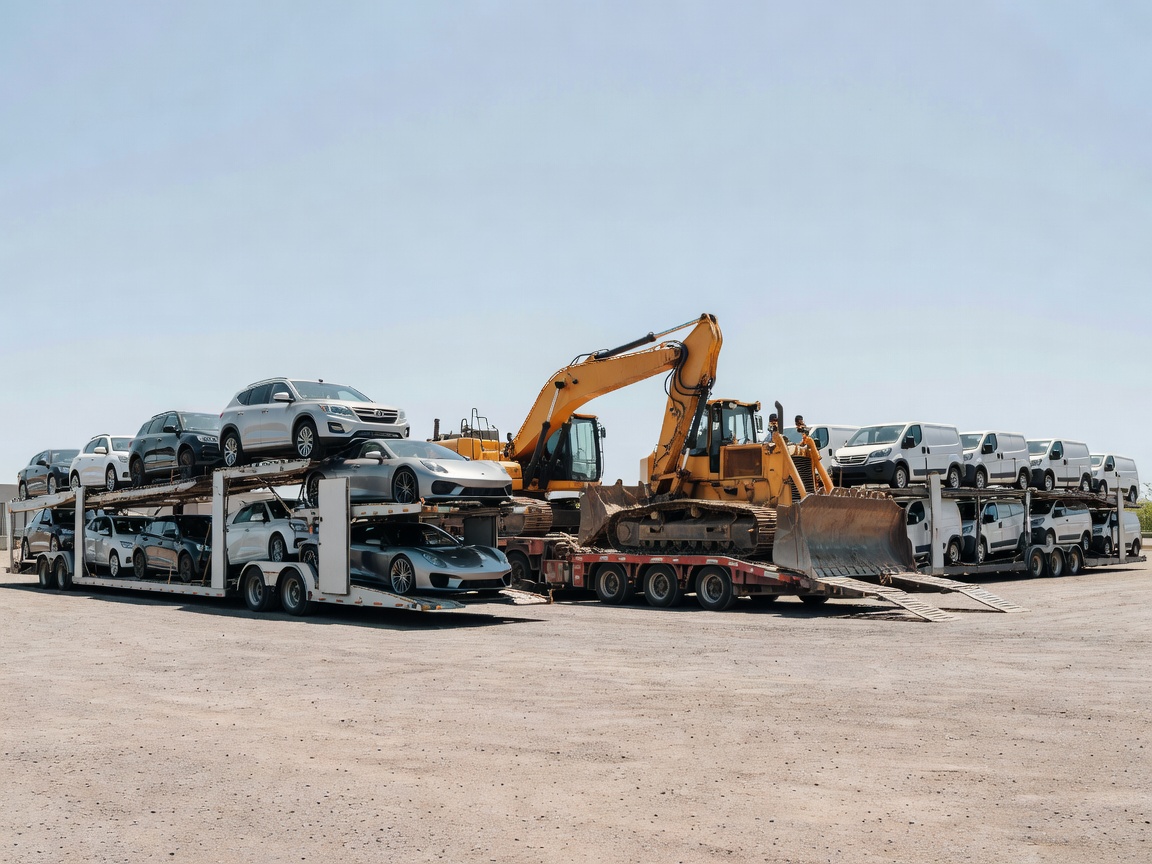
Open carriers are the standard sight on long-distance roads. Several vehicles can travel together, making the method practical for ordinary cars, dealership movements and owners who mainly need the vehicle moved safely from one place to another. The car remains exposed to rain, road spray, dust and seasonal conditions, much as it would during a long motorway trip.
That exposure is a limitation, not necessarily a problem. A used daily driver with a documented pre-existing condition may be perfectly suited to open transport. It is still sensible to remove loose items, secure the vehicle properly and record its condition before loading. Discuss low ground clearance, unusual dimensions and non-running status in advance.
Enclosed transport
An enclosed carrier places the car inside a covered trailer. This reduces exposure to weather, road debris and public visibility. It can be a sensible choice for a restored car, a delicate finish, a competition vehicle or a vehicle whose owner places a high value on privacy and presentation.
More protection can mean less flexibility. Enclosed capacity may be limited, loading requirements may be more specific and the arrangement may cost more than open transport. Exact pricing depends on the route, vehicle and provider, so avoid treating a broad comparison as a quote.
A simple decision guide
Open may fit when…
- The vehicle is an everyday car.
- Normal road exposure is acceptable.
- Some flexibility matters.
- The car can be loaded and secured normally.
Enclosed may fit when…
- The vehicle is specialist or highly finished.
- Weather and visibility are particular concerns.
- Additional handling protection matters.
- The schedule and budget allow a more specific arrangement.
Whichever method you choose, ask how the vehicle is secured, who records its condition, what happens if access is unsuitable and how delivery issues are reported. A good method with vague handover arrangements is still an unfinished plan.